• Welcome to the ElgrandOC forum.

    You will find that the majority of the forum is locked, but do not worry. You can unlock more content by registering to the forum completely free. Sign up is automatic, does not require email confirmation and is instant. Feel free to browse through the sections to see what topics have been covered before you register.
    You can register for an account by CLICKING HERE

    Once you have registered, you will unlock more of the forum content. You will not unlock all of the content until you have reached 10 posts. This is to give you an opportunity to chat to existing members and help to integrate you into the forum community.
    We are a friendly and helpful community and there is a wealth of infomation contained within the forum. Please feel free to register, introduce yourself and get to know your fellow members.

    Feel free to look at the Frequently Asked Questions section, the Meets/Events section and the Competition Section without having to register.
    We look forward to getting to know you and help you with any questions or problemd you have with your Elgrand.

What have you done to your Elgrand today?

Well, today I swapped out the ECCU's. Bravery Corporation out, Impul in. No marked difference, perhaps I sense that the Impul is a little less crisp on the low down pick up and possibly differing gear change points, but might just be imagination. Also, idle is a tad higher and it won't respond to an IAV relearn, but that could be unrelated. Otherwise seems to be much the same.

I did clear the self learn so I'll run it for a while to let it get used to its new home and see if there is any small change in fuel consumption. I'll be doing a top end service soon so will try another IAV relearn after that.

The gearbox ECU decides when gear changes happen but can call on the engine ECU to limit torque output usually during shifting.

Clearing self learn clears the fuel trims but if the ECU has been fitted to a different vehicle (with different MAF) in the past that might not have been a bad idea. The IAVL won't run successfully until mixture is correct (and pre cat lambda readings are flicking as expected), so might just take a bit of engine running to relearn fuel trims before IAVL will work successfully. If the mixture is a bit lean it needs a bit more air to maintain an idle speed, a bit rich up to a point and it needs a bit less air, very rich and it needs more air again, so there's no point it learning throttle position for correct idle speed until mixture is correct because if it's learned with incorrect mixture idle speed will change when mixture is correct. Sometimes though it's just a matter of turning the engine off, restarting when fully warmed up then the IAVL might run OK.
 
The gearbox ECU decides when gear changes happen but can call on the engine ECU to limit torque output usually during shifting.

Clearing self learn clears the fuel trims but if the ECU has been fitted to a different vehicle (with different MAF) in the past that might not have been a bad idea. The IAVL won't run successfully until mixture is correct (and pre cat lambda readings are flicking as expected), so might just take a bit of engine running to relearn fuel trims before IAVL will work successfully. If the mixture is a bit lean it needs a bit more air to maintain an idle speed, a bit rich up to a point and it needs a bit less air, very rich and it needs more air again, so there's no point it learning throttle position for correct idle speed until mixture is correct because if it's learned with incorrect mixture idle speed will change when mixture is correct. Sometimes though it's just a matter of turning the engine off, restarting when fully warmed up then the IAVL might run OK.
Thanks for the input. Idle isn't massively high and smooth enough, around 800rpm and it's running fine otherwise so will wait until after the top end service as things may change a bit after that.
 
I don't like to say it but in my opinion smoking is usually down to piston rings / blowby, if the PCV is clogged it's often because ring blowby caused it to be clogged. Sometimes if the PCV is clogged it could work as good as a new one after being unclogged (clean the gunk out of the PCV) but ring blowby might see it get clogged again. The PCV valve doesn't actually do a lot on these normally aspirated engines and has no roll in separating oil from crankcase gasses, on turbo'd engines they prevent boost pressurising the crankcase, on normally aspirated engines they do much the same kind of thing but to a lesser degree because normally aspirated engines never have boost pressure... But at least a functioning PCV prevents plenum gasses that might contain petrol fumes entering the crankcase when you put your foot down. I reckon you could probably glue the PCV valve open and it still wouldn't use any more oil into the plenum from the crankcase than a new PCV valve, it still offers around the same restriction to air (and oil) flow from the crankcase when open (as long as the internals are still present) as when closed because it is normally open unless you've been driving at part throttle then suddenly put your foot down at which point it will momentarily close before opening again. Likewise you could probably replace the PCV valve with something that just has a small hole of around a couple of mm diameter and it wouldn't cause the engine to smoke any more than a good or bad PCV valve. The difference would be that the small hole wouldn't have a one way valve so when you put your foot down it could allow plenum gasses from flowing into the crankcase. Said it many times, a failed PCV doesn't cause oil in the plenum or engines to smoke even if it is stuck open. Cleaning gloop out of the plenum may initially lower the amount of smoke from an engine because it gives the engine less gloop to inhale and burn until the gloop builds up again, the gloop builds up because of blowby. I've worked on thousands of Elgrands and replaced the PCV on many (usually at owners request, including one I changed today) but I've only ever seen a couple of PCV's that had failed in a way that saw them cause less restriction to flow of crankcase gas and oil into the plenum than a good/new one. Even if stuck open they normally only give same restriction to crankcase gas and oil flowing into the plenum that a good/new PCV will give in normal operation because in normal operation they are in the open position anyway, it is only if they fail in a way that sees less restriction than the usual open position that they could cause smoking and increased oil use because they are normally open except for a brief moment at a time when you've been at part throttle and increase throttle quickly.

What about vacuum?
 
I don't like to say it but in my opinion smoking is usually down to piston rings / blowby, if the PCV is clogged it's often because ring blowby caused it to be clogged. Sometimes if the PCV is clogged it could work as good as a new one after being unclogged (clean the gunk out of the PCV) but ring blowby might see it get clogged again. The PCV valve doesn't actually do a lot on these normally aspirated engines and has no roll in separating oil from crankcase gasses, on turbo'd engines they prevent boost pressurising the crankcase, on normally aspirated engines they do much the same kind of thing but to a lesser degree because normally aspirated engines never have boost pressure... But at least a functioning PCV prevents plenum gasses that might contain petrol fumes entering the crankcase when you put your foot down. I reckon you could probably glue the PCV valve open and it still wouldn't use any more oil into the plenum from the crankcase than a new PCV valve, it still offers around the same restriction to air (and oil) flow from the crankcase when open (as long as the internals are still present) as when closed because it is normally open unless you've been driving at part throttle then suddenly put your foot down at which point it will momentarily close before opening again. Likewise you could probably replace the PCV valve with something that just has a small hole of around a couple of mm diameter and it wouldn't cause the engine to smoke any more than a good or bad PCV valve. The difference would be that the small hole wouldn't have a one way valve so when you put your foot down it could allow plenum gasses from flowing into the crankcase. Said it many times, a failed PCV doesn't cause oil in the plenum or engines to smoke even if it is stuck open. Cleaning gloop out of the plenum may initially lower the amount of smoke from an engine because it gives the engine less gloop to inhale and burn until the gloop builds up again, the gloop builds up because of blowby. I've worked on thousands of Elgrands and replaced the PCV on many (usually at owners request, including one I changed today) but I've only ever seen a couple of PCV's that had failed in a way that saw them cause less restriction to flow of crankcase gas and oil into the plenum than a good/new one. Even if stuck open they normally only give same restriction to crankcase gas and oil flowing into the plenum that a good/new PCV will give in normal operation because in normal operation they are in the open position anyway, it is only if they fail in a way that sees less restriction than the usual open position that they could cause smoking and increased oil use because they are normally open except for a brief moment at a time when you've been at part throttle and increase throttle quickly.
Simon, you are a walking automotive encyclopaedia. Who needs Google and ChatGPT when we have @Lpgc ?
 
I don't like to say it but in my opinion smoking is usually down to piston rings / blowby, if the PCV is clogged it's often because ring blowby caused it to be clogged. Sometimes if the PCV is clogged it could work as good as a new one after being unclogged (clean the gunk out of the PCV) but ring blowby might see it get clogged again. The PCV valve doesn't actually do a lot on these normally aspirated engines and has no roll in separating oil from crankcase gasses, on turbo'd engines they prevent boost pressurising the crankcase, on normally aspirated engines they do much the same kind of thing but to a lesser degree because normally aspirated engines never have boost pressure... But at least a functioning PCV prevents plenum gasses that might contain petrol fumes entering the crankcase when you put your foot down. I reckon you could probably glue the PCV valve open and it still wouldn't use any more oil into the plenum from the crankcase than a new PCV valve, it still offers around the same restriction to air (and oil) flow from the crankcase when open (as long as the internals are still present) as when closed because it is normally open unless you've been driving at part throttle then suddenly put your foot down at which point it will momentarily close before opening again. Likewise you could probably replace the PCV valve with something that just has a small hole of around a couple of mm diameter and it wouldn't cause the engine to smoke any more than a good or bad PCV valve. The difference would be that the small hole wouldn't have a one way valve so when you put your foot down it could allow plenum gasses from flowing into the crankcase. Said it many times, a failed PCV doesn't cause oil in the plenum or engines to smoke even if it is stuck open. Cleaning gloop out of the plenum may initially lower the amount of smoke from an engine because it gives the engine less gloop to inhale and burn until the gloop builds up again, the gloop builds up because of blowby. I've worked on thousands of Elgrands and replaced the PCV on many (usually at owners request, including one I changed today) but I've only ever seen a couple of PCV's that had failed in a way that saw them cause less restriction to flow of crankcase gas and oil into the plenum than a good/new one. Even if stuck open they normally only give same restriction to crankcase gas and oil flowing into the plenum that a good/new PCV will give in normal operation because in normal operation they are in the open position anyway, it is only if they fail in a way that sees less restriction than the usual open position that they could cause smoking and increased oil use because they are normally open except for a brief moment at a time when you've been at part throttle and increase throttle quickly.
Thanks for the reply, I agree the root cause likely isn’t the PCV itself but underlying blow-by. My aim was to minimise the impact by fitting a catch can, and relocating the new PCV to make it easier to maintain or replace in future. It’s definitely not a fix, but hopefully it helps reduce the symptoms. Time will tell, but I'm not up for an engine change / rebuild just yet - the engine runs well but the smoking was too much to ignore.
 
What about vacuum?
Not sure what you mean but plenum vacuum sucks the PCV valve to it's open position, it's open most of the time because vacuum sucks it open.

People change the PCV valve thinking if it's stuck in the open position it will allow the plenum vacuum to suck more stuff out of the crankcase. But what I'm saying is if it's stuck open it's stuck in the position it would be in when the engine is running anyway. As long as the guts of the PCV valve are still inside it it's going to have much the same restriction to stuff being sucked from the crankcase into the plenum as it would if it were working properly. The difference between a good PCV and a bad PCV is that when you're at part throttle and increase the throttle (so plenum pressure increases) a good PCV might momentarily close to prevent air and fumes from the plenum entering the crankcase but this is much less important on a normally aspirated engine than on a turbo'd engine.

If people remove a PCV valve and find it is stuck open they presume this is the cause of gunk in the inlet plenum causing the engine to smoke. But the PCV valve is pretty much stuck open during most driving conditions anyway because it is a one way valve that opens to allow crankcase gasses into the plenum that's under vacuum but not less gasses from the plenum back into the crankcase. Even if a PCV valve is stuck open, as long as it has a similar level of resistance if you suck on it from the plenum side as a new or none broken PCV valve (which is usually the case because the internals of the PCV valve don't break, they just get stuck open due to old oil and crud etc) it will restrict flow of gasses and oil from the crankcase into the plenum just as well as a good or new PCV valve. The PCV valve doesn't have any oil separation properties, if there are any oil separation aspects they are done by baffles inside the cam cover not by the PCV valve. If there is excess oil inside the plenum causing the engine to smoke it was probably forced there by excess gasses produced in the crankcase that are the result of piston blowby, it was probably excess blowby that caused the PCV to get stuck open but being stuck open doesn't effect the amount of oil that gets into the plenum.

Or I could let Google AI explain...

Yes, a PCV (Positive Crankcase Ventilation) valve is a one-way valve. It allows gases to flow from the crankcase to the intake manifold, but not the other way around. This is important because the PCV system helps to control emissions by rerouting crankcase gases into the engine's combustion chambers, preventing them from escaping into the atmosphere.

How it works:
  1. 1. Gases from the crankcase:
    The PCV valve is attached to the crankcase, which produces gases as the engine burns fuel.

  2. 2. One-way flow:
    The PCV valve is designed to allow these gases to flow out of the crankcase and into the intake manifold but prevent them from flowing back into the crankcase.

  3. 3. Intake manifold:
    The intake manifold creates a vacuum, which draws the gases from the crankcase into the engine for burning.
Why is it a one-way valve?
  • Prevents backflow:
    The PCV valve prevents backflow of combustion gases from the intake manifold into the crankcase.

  • Controls emissions:
    By rerouting gases into the combustion chambers, the PCV valve helps to control emissions.

  • Protects the engine:
    The one-way flow helps to prevent the crankcase from being pressurized and the engine from being subjected to high temperatures.
 
Last edited:
I think you should do a detailed write-up with photos of the install as loads of 'granders will want to do that upgrade.
I don’t think anyone will need it, but I’ve PMed you in case you are stuck.
 
Whilst fitting the new front discs and pads recently I noted that the drivers side inner CV joint boot was split again. That's the third one within two years. Nissan manage to make them last 20 years. The quality of many aftermarket parts is appalling.

Anyway, I decided to replace the whole inner joint assembly this time considering that it has been open to the elements three times. The boot looks a little better in quality but time will tell. I bought two and will replace the other at the weekend as the CT is approaching and I can just imagine the other one failing the day before, as both the boots were replaced together the last time.

IMG_20250611_144645816_MP.jpg
 
Whilst fitting the new front discs and pads recently I noted that the drivers side inner CV joint boot was split again. That's the third one within two years. Nissan manage to make them last 20 years. The quality of many aftermarket parts is appalling.

Anyway, I decided to replace the whole inner joint assembly this time considering that it has been open to the elements three times. The boot looks a little better in quality but time will tell. I bought two and will replace the other at the weekend as the CT is approaching and I can just imagine the other one failing the day before, as both the boots were replaced together the last time.

View attachment 115099
I bet Nissan still make them
 
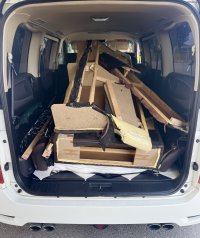
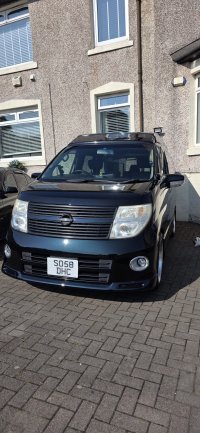
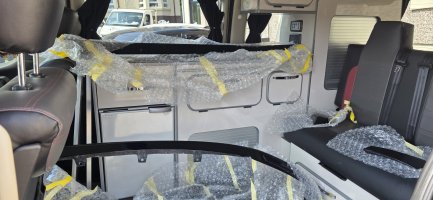
Bumper spoiler and bhan bonnet spoiler back from the painters, bumper spoiler fitted.
Hopefully get the bonnet done tomorrow.

20250611_153943.jpg20250611_154248.jpg20250611_170655.jpg
 

Attachments

  • 20250611_170655.jpg
    20250611_170655.jpg
    587.6 KB · Views: 4
  • 20250611_154248.jpg
    20250611_154248.jpg
    454.2 KB · Views: 3
  • 20250611_153943.jpg
    20250611_153943.jpg
    375.8 KB · Views: 4
Whilst fitting the new front discs and pads recently I noted that the drivers side inner CV joint boot was split again. That's the third one within two years. Nissan manage to make them last 20 years. The quality of many aftermarket parts is appalling.

Anyway, I decided to replace the whole inner joint assembly this time considering that it has been open to the elements three times. The boot looks a little better in quality but time will tell. I bought two and will replace the other at the weekend as the CT is approaching and I can just imagine the other one failing the day before, as both the boots were replaced together the last time.

View attachment 115099
Treat the rubber whilst they’re new
 
Back
Top